5 min read · 1,153 words
This article was written with AI. It was drafted from the sources it cites and checked against the full text of those sources before publishing. How we make articles
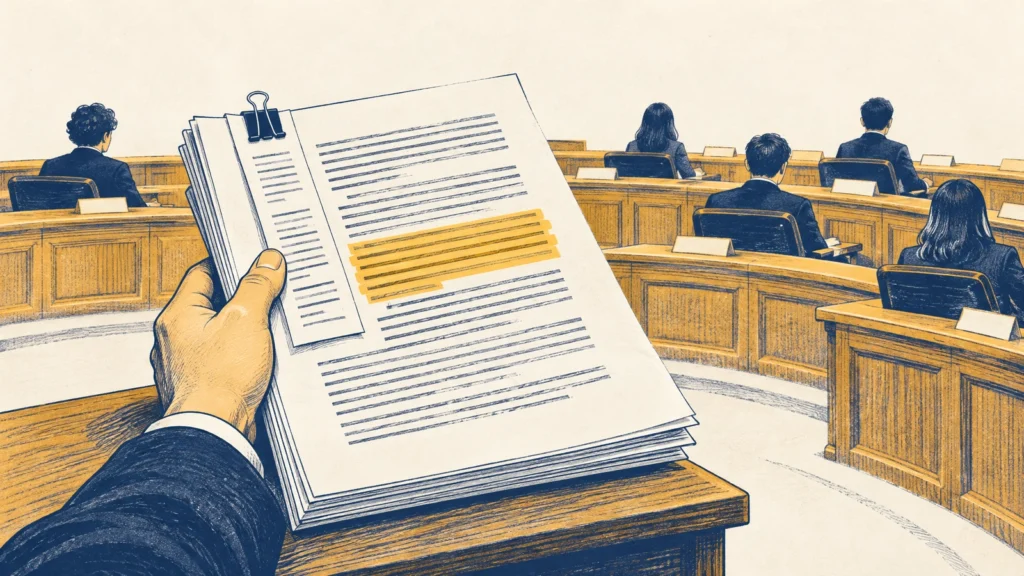
Ninety-eight high school students representing all 50 states gathered in a replica of the U.S. Senate chamber in Boston (NPR; Education Week), and over three days, July 17 through 19, 2026, they wrote, debated, and passed the Students First Act at America’s Youth AI Festival (Education Week). The bill passed overwhelmingly, NPR reported (NPR). This version came from the students it would govern, and AASA, the School Superintendents Association, plans to share it with more than 10,000 school and district leaders, Education Week reports (Education Week); NPR puts the figure at 10,000 school leaders (NPR).
What the STUDENTS FIRST Act Says
The student rules are stricter than a student-written bill might suggest. The bill says students should never use AI for the act of writing, though editing, brainstorming, and studying with AI are permitted after eighth grade; students may not use AI to complete artistic assignments; AI use is strictly prohibited on all graded assessments, with a zero for a student caught using it unless the teacher specifies otherwise; and students “must have permission from a teacher to use AI to assist in an assignment,” and students who use AI “must cite how and where they used it or else it will be considered plagiarism” (aasa.org). Teachers, in turn, must use one standardized AI detector for written graded assessments and lockdown browsers for graded online assessments (aasa.org).
Two further provisions give the bill its student-rights character: an appeal right with a guaranteed thorough examination, and AI literacy instruction from a student’s first classroom device. The bill’s student-rights section, whose amendments the STUDENT subcommittee proposed and the full Student Senate added by majority vote, reads: “States shall require schools to provide AI literacy instruction when students start using devices in the classroom”; students “should have the right to appeal any convictions of wrongful AI use”; and those suspected of using AI “should be guaranteed a thorough examination of their work by two school officials” (AASA). High school students can also refuse to use AI tools in class and must be given an alternative assignment (aasa.org). Before the final vote, Connecticut’s Bena Mejia Romero told her fellow senators the bill “is about who gets a seat at the table” (NPR).
Who Wrote It, and Why Nobody Has to Obey It
Legally, the document sits closer to model legislation than to policy. Government Technology describes it as nonbinding (govtech.com), and NPR notes that the act “isn’t actually law, any more than the teens are actually senators” (NPR). The students produced the document over three days at the festival (Education Week). Government Technology’s framing, students drafting what they think national policy should look like, highlights how unusual the provenance is (govtech.com).
That combination may explain why a nonbinding text could still move practice. Students supplied legitimacy, having drafted rules for their own work, and superintendents supply reach through the AASA network.
Where District AI Policy Stands
New York City Schools Chancellor Kamar Samuels told principals to hold off on new technology purchases until a long-overdue AI policy is ready, writing in an email that “any policy changes … may potentially impact your technology buying decisions this summer” (nydailynews.com).
On this article’s reading, a district that adopts or adapts the Students First Act gains three things at once: a defensible usage line, AI-literacy instruction tied to students’ first use of school devices, and an appeal process that predates the first accusation.
Timing gives the document unusual use. A national text shared with more than 10,000 school and district leaders (Education Week) before local rules are written could become a default first draft.
more than 10,000
School and district leaders AASA plans to share it with
The Literacy-Over-Limits Counterargument
A serious objection deserves a serious answer, and in its strongest form it is an argument for teaching AI literacy rather than writing AI rules. A version of it came from inside the drafting: Missouri’s Herrera argued an early draft let students use AI before they were proficient, and her subcommittee’s proposed solution was to require schools to teach AI literacy as soon as devices are introduced in the classroom (NPR). On this view, banning AI from writing assignments trains students for a world that no longer exists, and every hour spent policing usage is an hour not spent teaching competent use.
The bill meets that critique only halfway. Its literacy mandate attaches to a student’s first classroom device, and editing, brainstorming, and studying with AI are permitted after eighth grade. But it also bans AI on all graded assessments and requires a student to have a teacher’s permission before using AI to assist in an assignment (aasa.org). On this article’s reading, the sharpest line in the bill is the one around assessment.
What Administrators Should Do With the Text
A district can read the final bill PDF against its current handbook, define the appeal path before adopting any detection tool, schedule literacy training to begin when students first use devices in the classroom (the trigger the text specifies), and compare whatever emerges with New York City’s pending policy.
From Distribution to Adoption: Will a Nonbinding Text Stick?
Distribution is not adoption, and the distance between the two is the least evidenced link in the case for the Students First Act’s real-world influence.
Its organizers, including AASA, say they intend it to inform conversations among districts, educators and policymakers as schools continue developing AI governance policies, a framing that lowers the political cost of borrowing from it (govtech.com).
None of this guarantees a single adoption, but AASA’s planned distribution converts the bill’s influence from speculation into a testable prediction: count how many 2026–27 handbooks echo the phrase “right to appeal.” If the count is zero by spring, the skeptics win; if it is not, a replica Senate will have legislated anyway.
References
- Adults have struggled to set rules for AI in school. These teens figured it out (NPR) — Reporting on the students’ session and the bill’s usage rules.
- Students Create National Framework for AI in Schools (Government Technology) — Details the AI-literacy trigger: instruction from when students first start using classroom devices.
- Students Created a National AI Policy Framework. Here’s What It Includes (Education Week) — Education Week’s report on the students’ three days in Boston and the framework’s sharing with AASA’s network of more than 10,000 school and district leaders.
- The STUDENTS FIRST Act Final Bill (AASA PDF) — Primary document: the full text as passed, hosted by the superintendents association.
- NYC public schools puts technology purchases on hold (New York Daily News), District-level procurement pause and Chancellor Samuels directive.